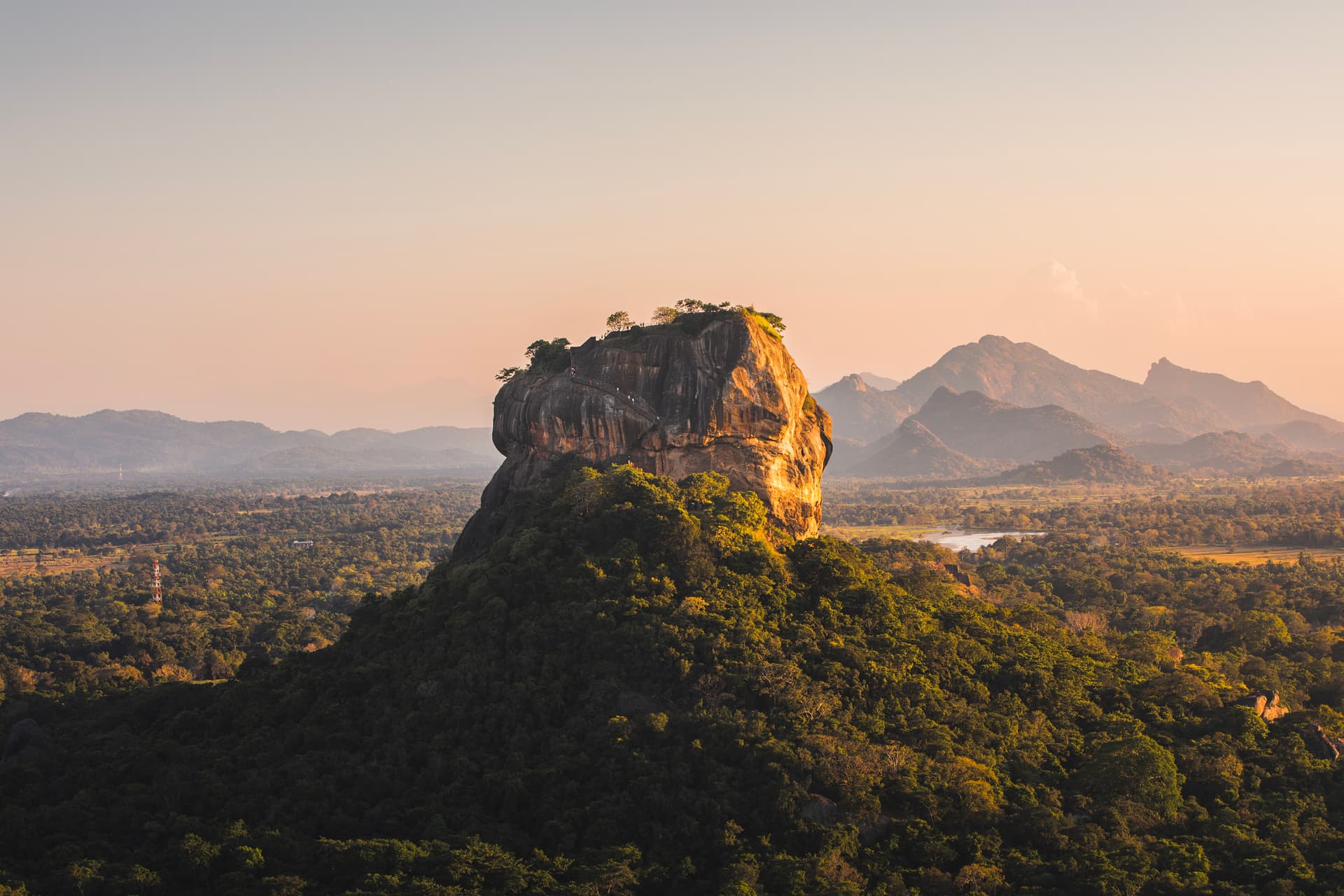
Sigiriya
UNESCO World Heritage Site
The Fortress in the Sky
Rising 200 metres above the surrounding jungle, Sigiriya is one of the most dramatic archaeological sites on earth. In the 5th century, King Kashyapa chose this massive granite monolith as the site for his royal citadel, constructing a palace complex at the summit complete with gardens, cisterns, and frescoed galleries. The ruins of that ambition still stand, and the climb to the top remains one of Sri Lanka's defining experiences.
But Sigiriya is more than its famous rock. The surrounding Cultural Triangle is home to ancient cities, cave temples adorned with centuries of Buddhist art, and national parks where wild elephants gather in herds of hundreds. This is Sri Lanka's deep interior, where history and nature exist in a balance that has endured for millennia.
Places to Discover
Top Attractions
Ancient engineering, sacred art, and breathtaking natural beauty converge in the heart of Sri Lanka's Cultural Triangle.
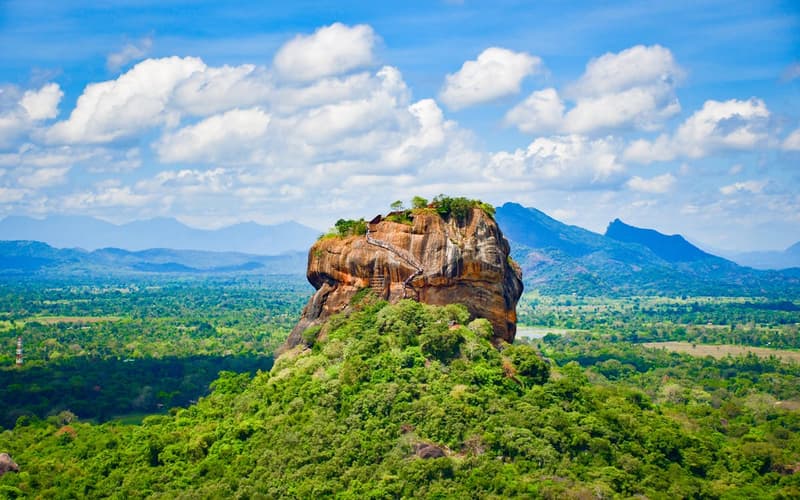
Sigiriya Lion Rock
The centrepiece of the site is the rock fortress itself, a UNESCO World Heritage Site since 1982. The ascent passes through landscaped boulder gardens, the celebrated Mirror Wall, and galleries of ancient frescoes before arriving at the iconic Lion's Paw terrace. From the summit, the views stretch across an unbroken canopy of jungle and reservoirs that King Kashyapa engineered fifteen centuries ago.
Sigiriya Frescoes
Painted into a sheltered rock pocket halfway up the ascent, these 5th-century murals depict celestial maidens in vivid mineral pigments. Only 19 of an estimated original 500 survive, but their beauty and the skill of their anonymous creators remain astonishing.
Mirror Wall
Originally polished to a reflective sheen so the king could see his reflection as he walked, this wall later became a canvas for visitors who left graffiti and poetry spanning a thousand years. These inscriptions are among the oldest surviving examples of Sinhalese prose.
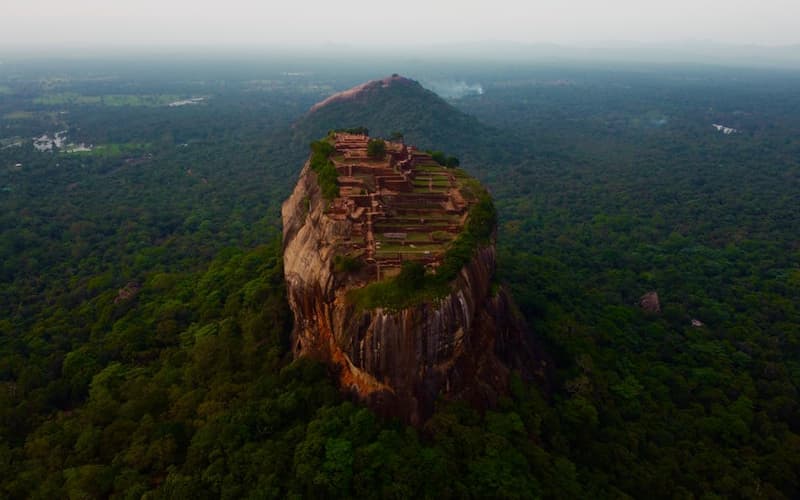
Water Gardens
At the base of the rock, Kashyapa's architects created one of the world's earliest landscaped gardens. Symmetrical pools, fountains that still function during the rainy season, and island pavilions demonstrate a sophistication of hydraulic engineering that was centuries ahead of its time.
Boulder Gardens
Massive boulders arranged along the lower slopes were transformed into meditation caves, audience halls, and residential quarters. Some bear the faint remains of ancient plaster and paint, evidence of the vibrant city that once surrounded the rock.
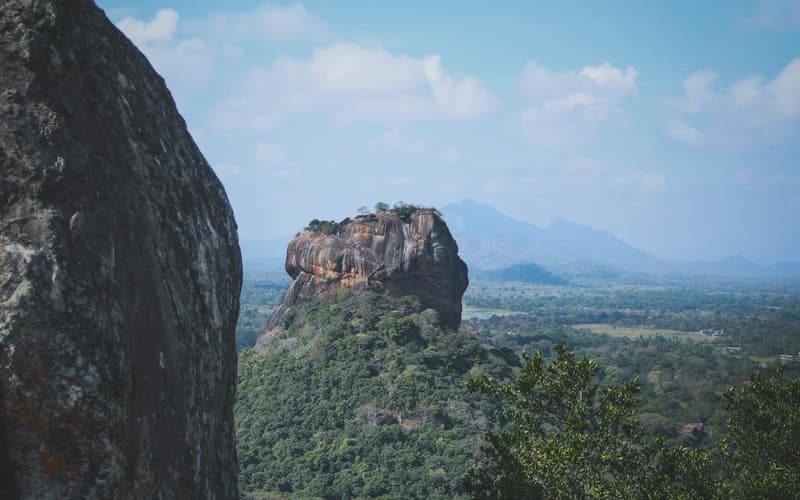
Pidurangala Rock
Just a short distance from Sigiriya, this neighbouring rock offers the finest view of Lion Rock itself. The sunrise climb has become a favourite among travellers. A reclining Buddha carved into the base and a monastery at the summit add historical depth to the experience.
What to Expect
The Climb
The ascent to the summit takes approximately 90 minutes at a comfortable pace, covering around 1,200 steps. The route is well-maintained with metal staircases and handrails along the steeper sections. There is no technical climbing involved, but a reasonable level of fitness is helpful.
We recommend starting early, ideally arriving at the site when it opens at 7:00 AM, to beat both the heat and the crowds. Bring water, wear comfortable shoes, and carry a hat for sun protection on the exposed upper sections. The final approach through the Lion's Paw gateway is narrow but manageable, and the reward at the top is one of the greatest views in all of South Asia.
1,200
Steps to Summit
200m
Height
90
Minutes Up
7 AM
Best Start Time
Nearby Excursions
The Dambulla Cave Temple, just 20 km south, contains five caves adorned with over 150 Buddha statues and 2,000 square metres of murals, the largest and best-preserved cave temple complex in Sri Lanka.
Minneriya National Park, less than an hour's drive east, hosts "The Gathering," one of Asia's greatest wildlife spectacles. Between July and October, up to 300 wild elephants congregate around the receding reservoir to graze on fresh grass.
Best Time to Visit
Sigiriya sits in Sri Lanka's dry zone, where temperatures are warm year-round, typically ranging from 25 to 33 degrees Celsius. The driest months are February through September, with the clearest skies for summit views.
If your itinerary allows, time your visit to coincide with the elephant gathering at Minneriya between July and October. Combining Sigiriya with an afternoon safari makes for one of Sri Lanka's most unforgettable days.
Ready to Explore?
Conquer the Lion Rock
Let us plan a seamless Sigiriya experience, from expert-guided climbs to luxury stays in the Cultural Triangle.