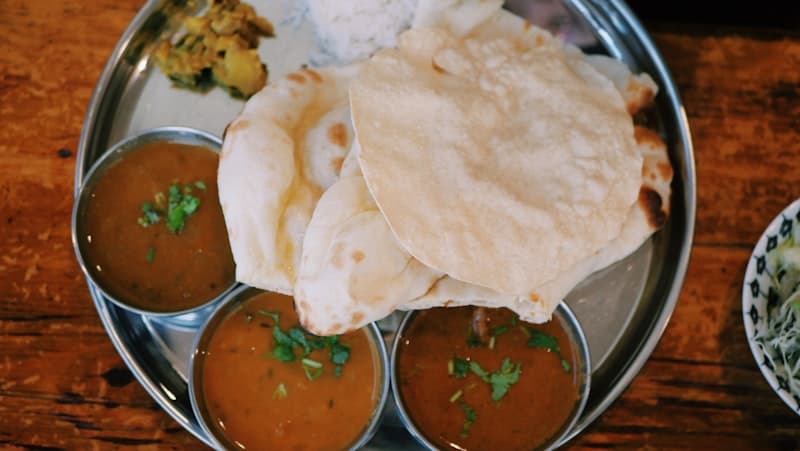
Sri Lankan cuisine is one of Asia's best-kept culinary secrets. Bold, layered, and intensely aromatic, it draws from centuries of trade, colonization, and cultural exchange with India, Southeast Asia, the Middle East, and Europe. The result is a food culture that is entirely its own: fiery yet nuanced, familiar yet full of surprises. For food lovers, eating your way through Sri Lanka is reason enough to visit.
Rice and Curry: The Heart of Every Meal
No dish defines Sri Lanka like rice and curry. But do not let the simple name mislead you. A proper Sri Lankan rice and curry is a spectacular spread: a generous mound of rice at the center, surrounded by five to twelve small dishes. There will be dhal, coconut sambol, a meat or fish curry, several vegetable preparations, pickles, chutneys, and crunchy poppadoms. Each element brings a different flavor and texture, and the art lies in combining them in every bite. The curries are coconut-milk based, heavily spiced with cinnamon, cardamom, curry leaves, and pandan, creating flavors that are rich without being heavy.
Hoppers: The Iconic Sri Lankan Breakfast
Hoppers (appam) are bowl-shaped crepes made from fermented rice flour and coconut milk, cooked in a small wok-like pan. The edges are thin and crispy while the center remains soft and slightly spongy. An egg hopper features a fried egg nestled in the center. String hoppers (idiyappam) are delicate nests of steamed rice noodles, typically served with coconut milk gravy and a fiery sambol for breakfast. Both are staples of the Sri Lankan morning table and an essential experience for any visitor.
Kottu Roti: Sri Lanka's Street Food King
Follow the rhythmic clang of metal on metal at any evening food stall and you will find kottu roti. Shredded roti bread is chopped on a hot griddle with vegetables, eggs, and your choice of meat or cheese, seasoned with curry leaves, chili, and soy sauce. The result is a hearty, flavorful dish that perfectly captures the energy of Sri Lankan street food culture. Every town has its own variation, and watching the preparation is half the experience. Kottu is best enjoyed piping hot from a roadside stall, but upscale versions appear on resort menus throughout the island.
Seafood Along the Coast
Sri Lanka's coastline delivers some of the freshest seafood in the Indian Ocean. In Negombo, the morning fish market is a spectacle of color and energy. In Mirissa and Tangalle, beachfront restaurants grill the day's catch over coconut husks, serving whole fish with fiery chili sauce and lime. Jaffna crab curry, made with mud crabs in a rich, spiced gravy, is legendary. Prawn curry cooked in roasted coconut milk is another coastal highlight that rivals anything you will find in Southeast Asia.
Spice Gardens and Cooking Classes
Sri Lanka was once the center of the global spice trade, and the legacy lives on. Visiting a spice garden in the hill country near Kandy or Matale offers a sensory education. See cinnamon bark peeled by hand, watch how vanilla pods are cured, and learn to identify the plants behind the flavors you have been tasting. Many luxury hotels and guesthouses offer cooking classes where you can learn to prepare authentic Sri Lankan dishes under the guidance of local chefs. These sessions typically include a market visit, hands-on preparation, and the best reward of all: eating what you have made.
Street Food Tips
Sri Lanka's street food scene is vibrant and delicious, but a few guidelines will enhance the experience. Choose stalls with high turnover, as fresh preparation means better quality and safety. Look for isso wade (crispy lentil fritters topped with spicy prawns), rolls (crispy cylinders filled with curried fish or chicken), and wade (savory lentil doughnuts). Fresh king coconut, sold at roadside stalls throughout the island, is the most refreshing drink you will find in the tropics. Trust the crowds: if locals are lining up, the food is worth the wait.
Dining Etiquette
Sri Lankans traditionally eat with their right hand, mixing rice and curries with their fingers. You are welcome to use cutlery, but trying the traditional method at least once adds an authentic dimension to the experience. When dining at someone's home, wait to be served and accept second helpings graciously. Tea is offered as a gesture of hospitality and should always be accepted. At restaurants, a 10% service charge is often included, but a small additional tip is appreciated for exceptional service.
Hungry for Sri Lanka?
We can build a culinary-focused itinerary that includes cooking classes, market tours, spice garden visits, and reservations at the island's finest restaurants.
Plan Your Trip